
Send us the broken one.
Most parts that come through our shop arrive worn out, snapped in half, and with no drawing anywhere on the property. We measure what is left, work out what it was before it failed, and make you a new one. No print required.
The part you need probably isn't on a shelf anywhere.
A conveyor drive shaft snaps on second shift. A bushing in a twenty-year-old piece of processing equipment finally gives up. The OEM went out of business, or still exists but quotes eight weeks and a minimum order of ten for a part you need one of.
That is what a machine shop is for. Mosaix runs CNC and manual turning and milling out of our shop in Burley, Idaho, making one-off components, repair parts and replacements for equipment that is no longer supported. If we can hold the old part, we can usually make you a new one.
The same crews work in food processing, dairy and heavy industrial plants every week, so parts come back knowing what they have to survive — washdown, heat, load, or all three.

Custom parts, repair parts, and replacements for equipment nobody supports anymore.
Almost everything that comes through the shop falls into one of these. If yours does not, call anyway — odd jobs are most of the interesting work.
Custom Machined Parts
One-offs and short runs made to your print or to a sample. Brackets, spacers, adapters, hubs, keyed components, fixtures and the pieces that never existed as a catalog item in the first place.
- Single parts, no minimum
- Short production batches
- Made to print or to sample
Repair & Reverse Engineering
Bring us the worn one. We measure what is left, work back to what it was, and machine a replacement. The most common job in the shop, and the one that surprises people most.
- No drawing required
- Measured from the failed part
- Mating components checked
Shafts, Sleeves & Bushings
Drive shafts, stub shafts, journals, sleeves, bushings and bearing fits. Turned to size, keyways cut, and fits verified so the part goes together without persuasion.
- Keyways and shoulders
- Press and slip fits to spec
- Bronze and steel bushings
CNC Milling & Turning
A Haas vertical machining center and CNC turning for repeatable work, tighter tolerances and parts you will want again. Once a part is programmed, the second one is quick.
- Repeatable to the same numbers
- Programs kept for reorders
- Complex profiles and pockets
Large & Long Work
Long-bed manual lathes with steady rests for slender shafts, and a one-ton overhead crane for getting heavy components on and off the machines without a fight.
- Long shafts without deflection
- Large-diameter turning
- Crane-served setups
Obsolete & Discontinued Parts
Equipment usually outlives its parts supply. When the OEM has moved on, a machined replacement keeps a good machine running instead of forcing a capital purchase.
- Unsupported equipment
- Long-lead parts made locally
- Material upgraded where sensible
Order a new one, or bring us the old one.
The comparison that actually matters is not price per part. It is how many days the line sits still.
Ordering the replacement
- Lead time quoted in weeks, to a plant that is down today
- The part is discontinued and the answer is a whole new assembly
- Minimum order of ten, when one is what you need
- A part number nobody can find because the tag corroded off years ago
- Freight and customs on top, from somewhere that isn't Idaho
- The identical part fails again the identical way in two years
Machining it here
- Work starts from the worn part, so no part number is needed
- Days rather than weeks, and same day when a line is down
- One part, because one is what you asked for
- We can tell you why it failed, not just replace it
- Material or hardness upgraded when the original was the problem
- Under an hour from Burley to most plants in the Magic Valley
A real shop floor, not a subcontracted address.
Search for a machine shop and most of what comes back is a directory listing or a company several states away running a page with your city's name dropped into it. This is ours, in Burley, with the machines on it.
CNC alongside manual, which matters more than it sounds. CNC earns its keep on repeatable and complex work. A manual lathe with an experienced hand on it will have a simple bushing finished before a program is written. Having both means the job picks the machine instead of the other way round.
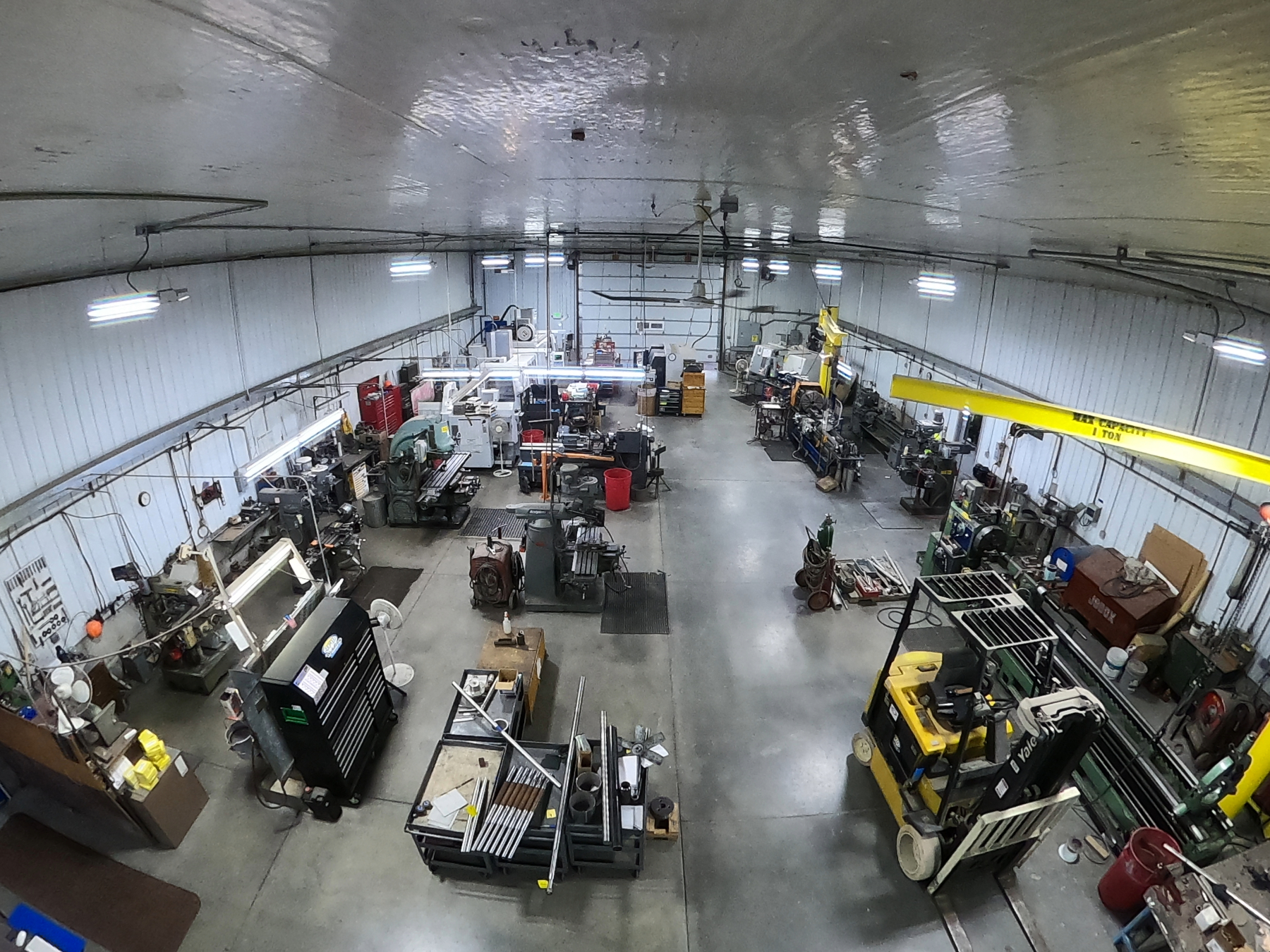
CNC
- Haas vertical machining center
- CNC turning with powered turret and tailstock
- Programs retained for repeat parts
Manual
- Several engine lathes, including long-bed capacity
- Steady rests for long, slender shafts
- Vertical milling machines
- Large horizontal mill
- Surface and pedestal grinding
- Drill presses and horizontal bandsaw
Shop support
- One-ton overhead jib crane
- Forklift for heavy in and out
- Oxy-fuel cutting
- Bar stock held in common sizes
- In-process inspection at the machine
From a broken part to a running machine.
Most jobs start with somebody putting a worn component on the counter and saying they need another one.
Bring us what broke
The part, a photo, a print if one exists, or just the machine it came out of. Tell us what it does and how it failed — that usually matters more than the drawing would have.
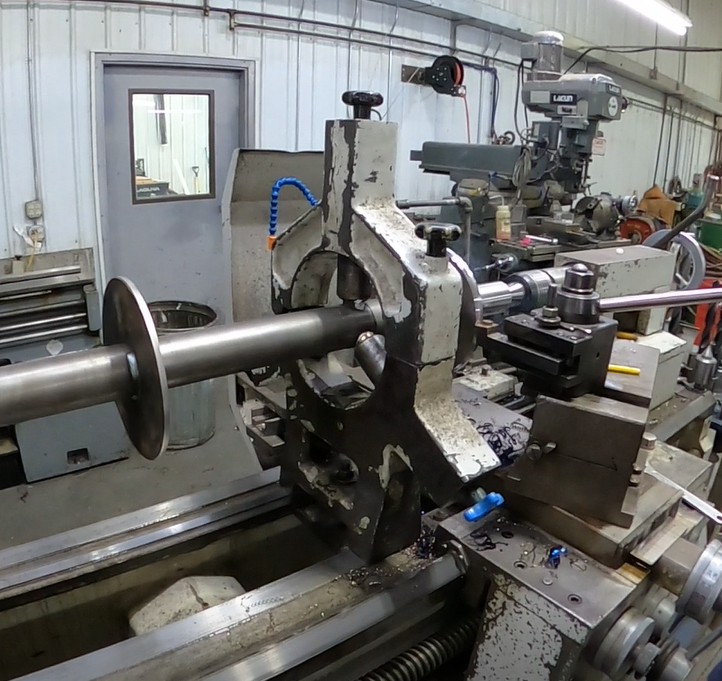
Measure and specify
We measure the part, check the mating components where we can get to them, and work out the original dimensions behind the wear. This is also where we tell you if the material was the reason it failed.
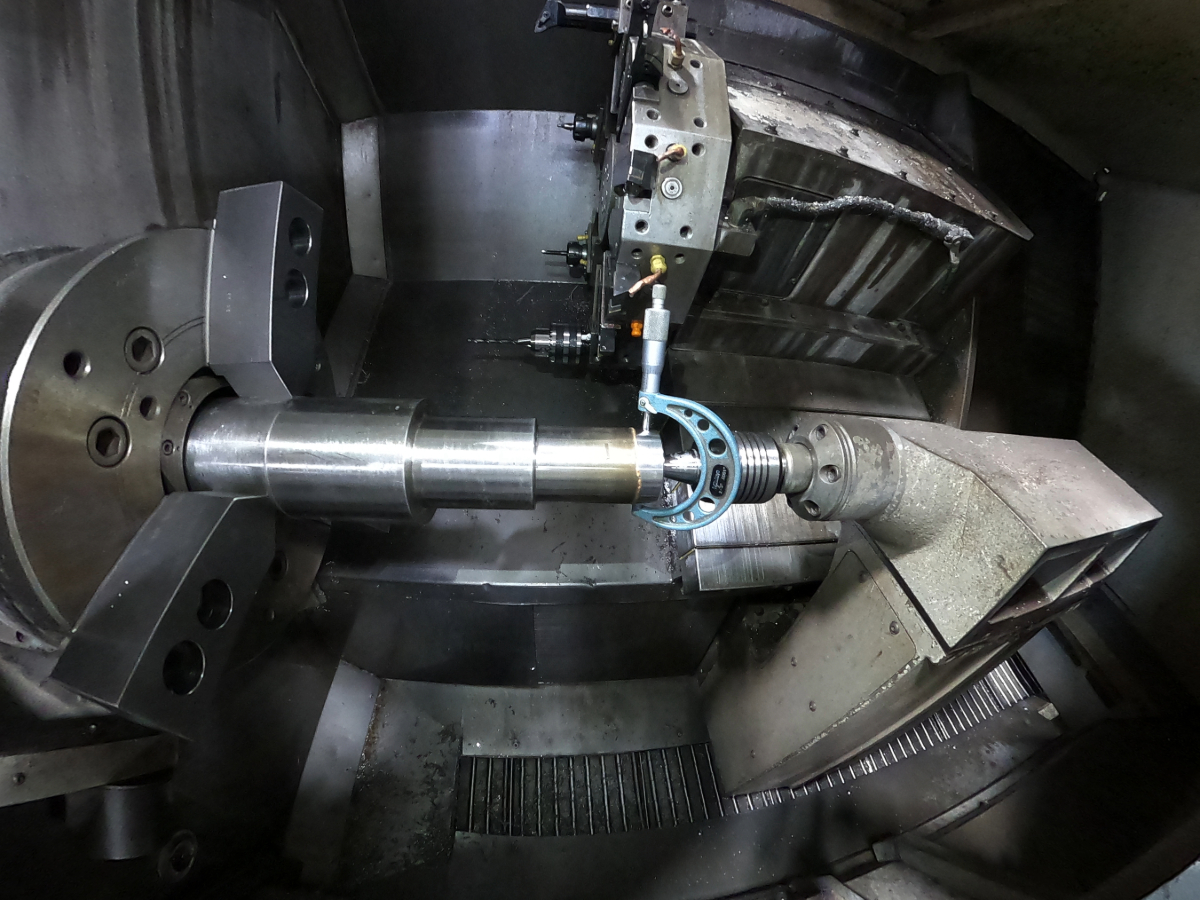
Pick the machine
CNC for repeatable, complex or reorder work. Manual for a one-off that will be done before a program could be written. The job decides, not the shop's preference.
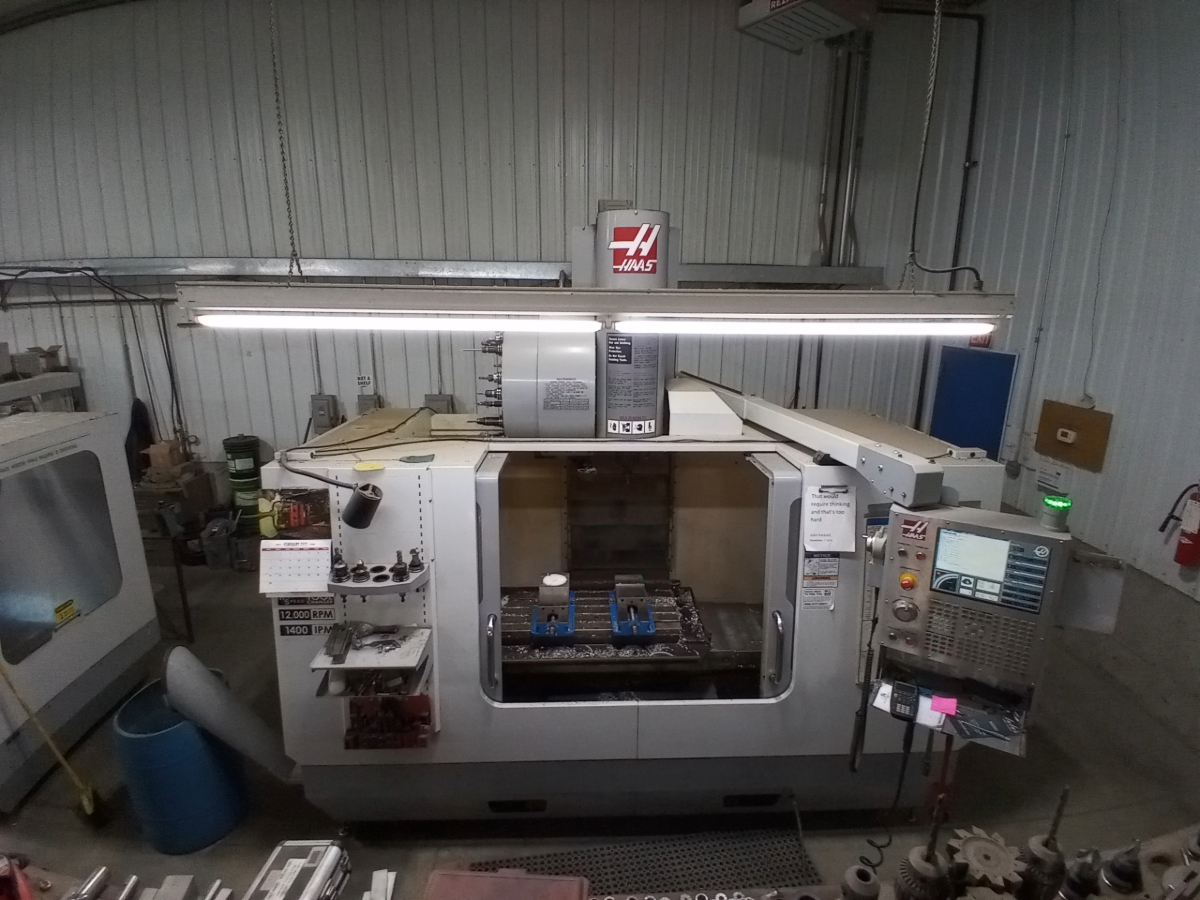
Machine it
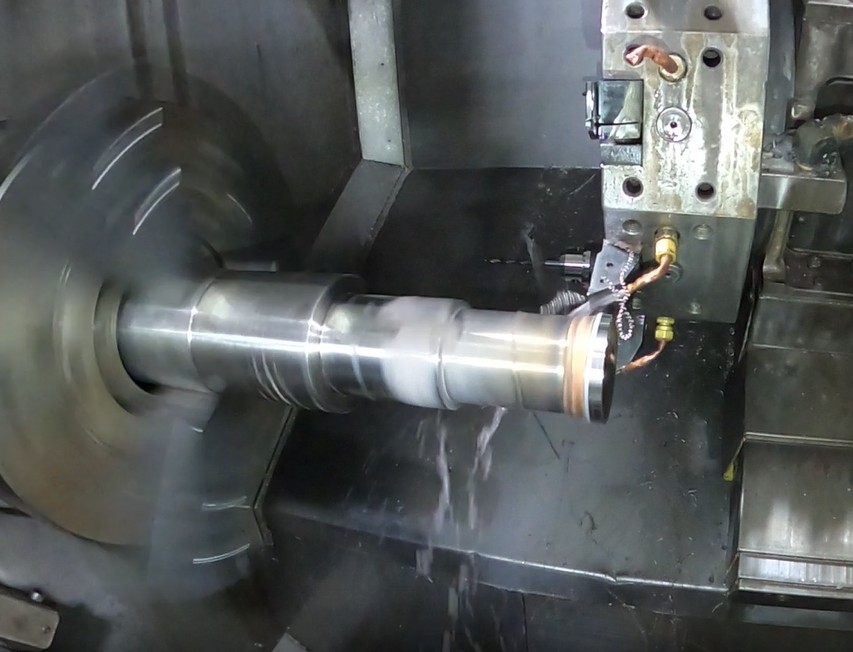
Turned, milled, bored, keyed and finished. Checked at the machine as it goes rather than at the end, because a part found oversize at the end of a job is a part made twice.
Fit and follow up
The part goes back in — by your crew or ours, since our millwrights are usually in the same plants anyway. We keep the measurements, so the second one is faster and cheaper than the first.
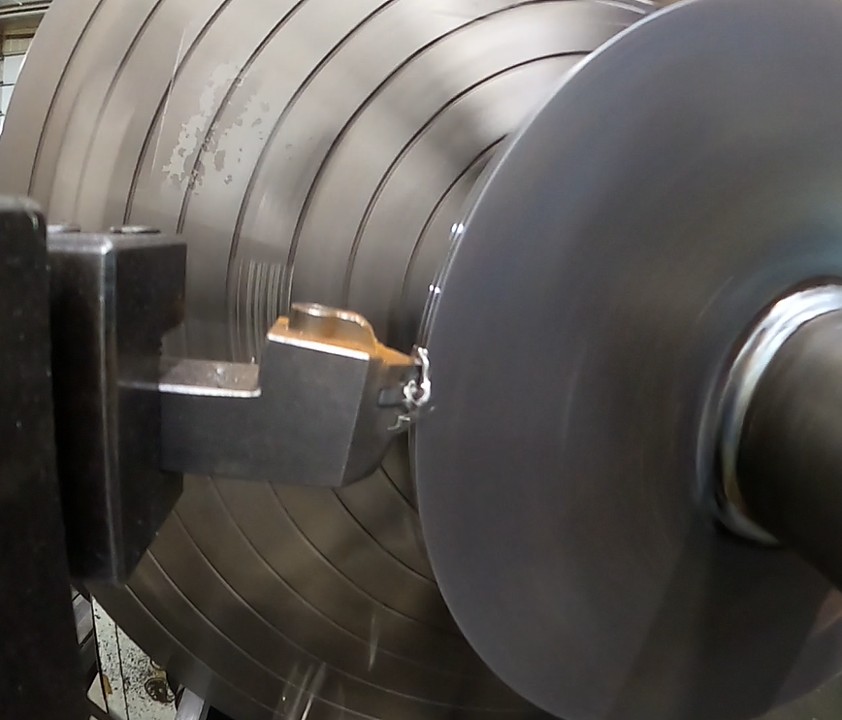
If the material is the reason the part failed, making the same part again out of the same stuff just schedules the next breakdown.
What we cut, and why it matters.
A replacement part is a chance to fix the original design, not just restore it. If a shaft wore because it was mild steel in an abrasive environment, or a bushing failed because bronze was the wrong answer for washdown, we will tell you before we make it rather than after it fails again.
- Carbon & alloy steel
- Stainless 304 & 316
- Aluminum
- Brass & bronze
- Cast iron
- Tool steel
- UHMW & nylon
- Customer-supplied stock
Line down and missing a part?
Call and describe it — what it came out of, what it does, and what it looks like now. Emergency work moves ahead of scheduled work, and a simple turned part can often be made the same day.
Chips on the floor in Burley.
Tap any photo to open it full size.
Close enough that the part gets there today.
The shop is in Burley, which puts us inside an hour of most of the food processing and dairy plants in the Mini-Cassia and Magic Valley area. Parts ship further than that all the time, but proximity is the whole point when a line is down.
- Burley, ID
- Rupert & Heyburn, ID
- Paul & Declo, ID
- Twin Falls, ID
- Jerome, ID
- Hazelton & Eden, ID
- Magic Valley
- Mini-Cassia
- Western United States
- Parts shipped nationwide
What people ask before they call.
Do you need a drawing to make a part?
No. Most of what we make arrives as the worn or broken original with no print anywhere on the property. We measure the part, work out what the dimensions were before it wore, and machine a new one. If you do have a drawing or the OEM part number it saves time, but neither is required.
Can you make a part the manufacturer no longer sells?
Yes, and it is a large share of our work. Equipment routinely outlives its parts supply, and the choice becomes a new machine or a machined replacement. If we can hold the old part, or measure the components it mates with, we can generally make it.
Will you machine a single part, or is there a minimum order?
One part is fine. Most jobs through our shop are a single component for one specific machine. We also run short batches when a plant would rather have a spare sitting on the shelf than make the same call again next year.
How fast can you turn a part around when a line is down?
It depends on the part and whether the material is on hand, but emergency work moves ahead of scheduled work and a simple turned part can often be made same day or overnight. Call the emergency line at (406) 480-4647 and describe the part rather than waiting on an emailed quote.
What materials do you machine?
Carbon and alloy steels, stainless, aluminum, brass and bronze, cast iron, tool steel, and engineering plastics such as UHMW and nylon. We will also machine customer-supplied stock. If the original material was the reason the part failed, we will say so and suggest an alternative rather than reproducing the problem.
Can you machine stainless parts for food contact areas?
Yes. We work in food processing and dairy plants every week and machine stainless for sanitary environments, including appropriate material selection and finish for washdown and product contact.
Do we have to bring the part to Burley?
Not necessarily. Plants across Mini-Cassia and the Magic Valley are close enough that our field crews are often already on site and the part can come back with them. On larger jobs we can remove the component, machine it, and refit it as one piece of work.
A machined part is often half the job.
Send a photo of the part.
A picture with a tape measure next to it tells us more than a paragraph will. Tell us what machine it came out of, what it does, and how soon you need it back in service.
Burley Shop
Where the parts get made. Drop-offs welcome.
238 W 35 SBurley, ID 83318