
Stainless steel fabrication built to be washed down.
Sanitary welding and stainless fabrication for the food processing and dairy plants of southern Idaho: tanks, hoppers, conveyor frames and product-handling equipment, built so the welds, the finish and the drainage all survive a daily caustic washdown instead of becoming the finding on your next audit.
Sanitary welding is where a stainless job is won or lost.
Carbon steel fabrication asks whether the thing will hold. Stainless fabrication for a food plant asks something harder: can the finished thing actually get clean? After a shift of product and a washdown with caustic and acid, is there anywhere left for bacteria to live?
That question gets answered at the weld. On product contact we run continuous welds, never stitch welds, then grind and blend them flush into the surrounding surface so there is no ledge, no crevice and no undercut where the bead meets the parent metal. On closed joints where the inside is a product surface we back-purge with argon. Weld stainless tube without shielding the ID and you are left with a rough grey-black scale the trade calls sugaring: chromium-depleted, coarse enough to hold product, and on the one side of the joint nobody can reach to fix.
Then the weld gets cleaned. Heat tint is not cosmetic. That straw-to-blue band beside the bead is chromium oxide, which means the chromium came out of the surface underneath, and what is left behind corrodes. It comes off with abrasives on open work and pickling paste where a wheel will not reach, and the surface is passivated to rebuild the passive layer. Shops skip this because the part looks finished either way. Six months into a washdown schedule you can see exactly which welds were cleaned and which were not.
Structural welds behind the product zone are a different conversation. There, stitch welding is correct and we use it to keep heat input down and distortion out. Knowing which rule applies where is most of the job.
Not a food-grade job? If what you need is structural (platforms, chutes, heavy weldments, carbon steel frames), that work lives on our metal fabrication page. Same shop, same welders, different rulebook.
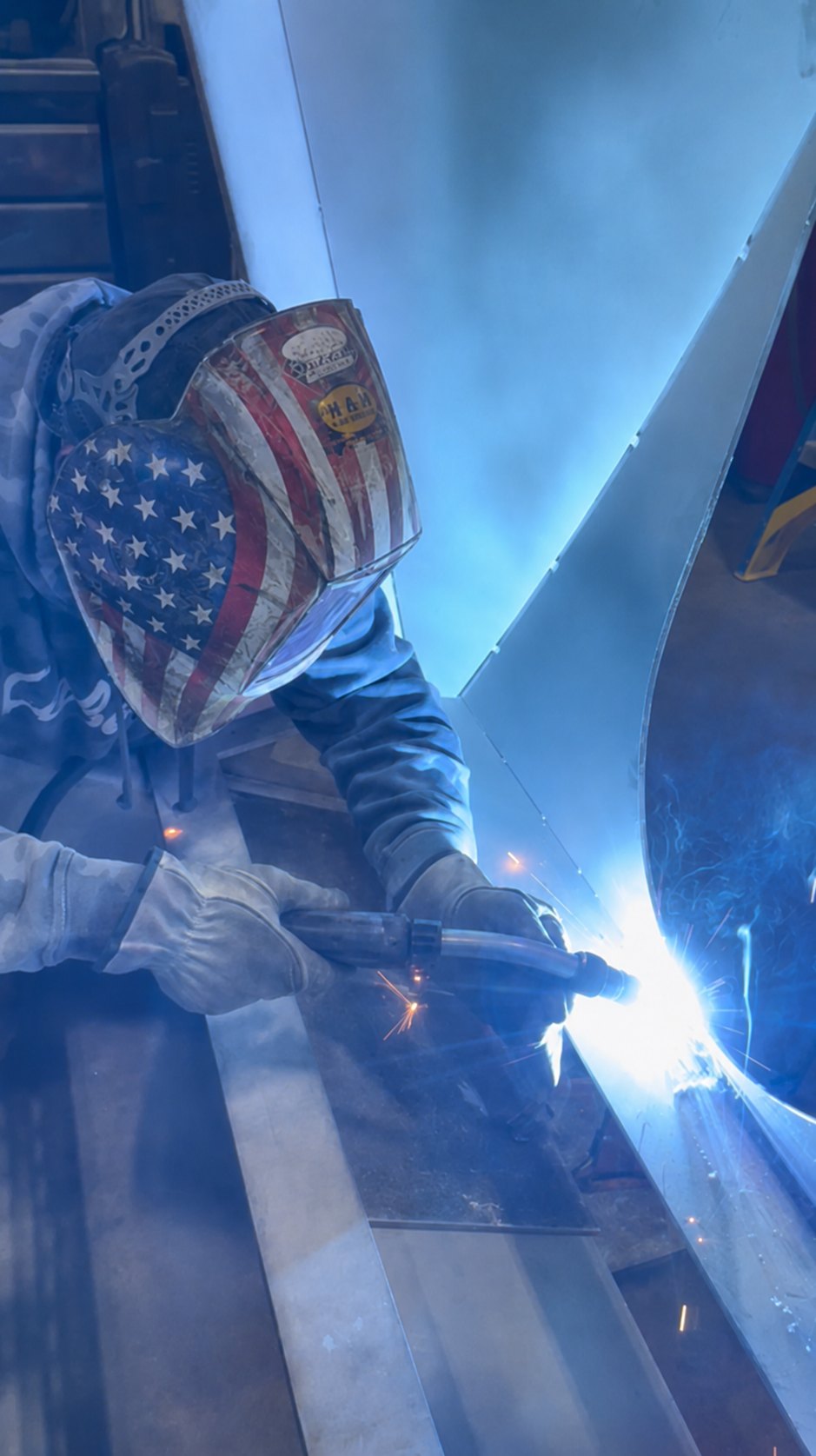
Four more lines worth writing into the spec.
Every one of them is invisible on the day the equipment is delivered, and every one of them shows up within a year.
The grade, and the letter after it
304 handles most food contact. 316 adds molybdenum and earns its premium wherever chlorides are in play: brine, whey, salt, chlorinated sanitizers. The letter matters more than most buyers realise. In 304L and 316L the carbon is held low so welding does not precipitate chromium carbides along the grain boundaries in the heat-affected zone. The first place a vessel starts to corrode is often a hair’s width from a perfectly sound weld.
Where the water goes when you stop spraying
A food-grade build is drawn around drainage. Surfaces slope. Horizontal ledges get eliminated or angled off. Hollow sections are sealed completely or not used at all. Legs are sealed and footed. Fasteners come out of the product zone anywhere a weld can replace them. Standing water is one of the most common findings in a plant audit, and it is designed in or designed out at the drawing stage, not patched afterwards.
Finish, measured rather than guessed
Product contact gets finished to the roughness the job calls for. 32 Ra µin (0.8 µm) or better is what most of our food and dairy customers specify, and it is the ceiling the 3-A sanitary standards work to. Smoother surfaces foul less and clean faster. Non-contact surfaces get finished to match, so the equipment reads as one machine rather than three subassemblies that happened to meet.
No carbon steel, ever, on a stainless surface
Free iron is the quiet failure. Touch stainless with a wheel, brush, clamp or table that has been on mild steel and you embed iron particles in the surface. On the day they are invisible. On the plant floor they rust, and every rust spot is somewhere product sits and somewhere an auditor stops walking. Stainless work here is segregated: dedicated wheels, dedicated brushes, dedicated fit-up space, stainless-only consumables.
| Grade | Where it belongs | Where it will let you down |
|---|---|---|
| 304 / 304L | The default for most dry and wet food contact: potato and vegetable handling, framing, hoppers, chutes, tables, guarding and structures in a washdown environment. | Chlorides. Brine, salt, whey and chlorinated sanitizers will pit it, and pitting starts small but does not stop. |
| 316 / 316L | Brine and salt contact, dairy and cheese process surfaces, whey handling, and anywhere the sanitation chemistry is aggressive or the product is acidic. | Nothing, except your budget. Specifying 316 everywhere is a common and expensive habit. |
| The “L” | Anything that gets welded, which in fabrication is effectively everything. Low carbon keeps the heat-affected zone from sensitising. | Marginally lower strength at high temperature, which almost never matters in food equipment. |
Not sure which grade your application needs? Tell us the product, the temperature and what sprays on it at the end of the shift. That is usually enough to settle it in one phone call, and it has saved more than one customer the cost of 316 they did not need.
“Anyone can lay a bead on stainless. Making it still clean out after eighteen months of caustic is a different trade.”
What we fabricate in stainless.
Most of it is equipment no catalogue sells: built to a drawing, to a plant’s existing line, or to a problem somebody has been working around for two years.
Tanks, vessels and troughs
Open-top and closed, insulated or bare. Shop-built complete, finished, then trucked and set.
- Manways, nozzles and fittings
- Agitator and drive mounts
- Internal seams welded and blended
Hoppers, bins and chutes
Cone angle, wall finish and outlet transition worked to the product so it flows instead of bridging.
- Cone and pyramidal hoppers
- Transitions and spouting
- Slide gates and liners
Conveyor frames and guarding
Frames, pans, side rails and guards built to drain, and built to come apart for cleaning.
- Belt and roller conveyor frames
- Drive and take-up mounts
- Removable guards and covers
Tables, platforms and work surfaces
Inspection and grading tables, sorting stations, washdown-rated stands and access platforms.
- Roller and brush grading tables
- Sort and trim stations
- Stands, stairs and handrail
Machine frames and process piping
Stainless structures that hold tolerance for the drives mounted to them, and sanitary tube runs that clean out.
- Welded frames and machined pads
- Tube and pipe runs, back-purged
- Racking, hangers and supports
Repairs, retrofits and OEM parts
A worn tank floor, a cracked member, a chute that never flowed, or a part the original maker no longer sells.
- Tank and vessel repair
- In-plant field welding
- Machined in-house
Two stainless tanks can look identical on delivery day.
What a general job shop can hand you
- Stitch welds on product contact surfaces
- Heat tint left beside every bead
- The inside of tube joints oxidised and rough
- Carbon steel grinding dust embedded in the finish
- Square tube frames holding water in every horizontal
- No material certs, so your auditor takes your word for it
What leaves our shop
- Continuous sanitary welds, ground and blended flush
- Heat tint removed, surface pickled and passivated
- Argon back-purge on closed joints with a product-side ID
- Stainless-only wheels, brushes, clamps and tables
- Sloped surfaces, sealed hollow sections, drainable frames
- Mill test reports handed over with the equipment
Stainless out of the Burley shop.
Built for plants across the Mini-Cassia and Magic Valley corridor. Tap any photo to see it full size.
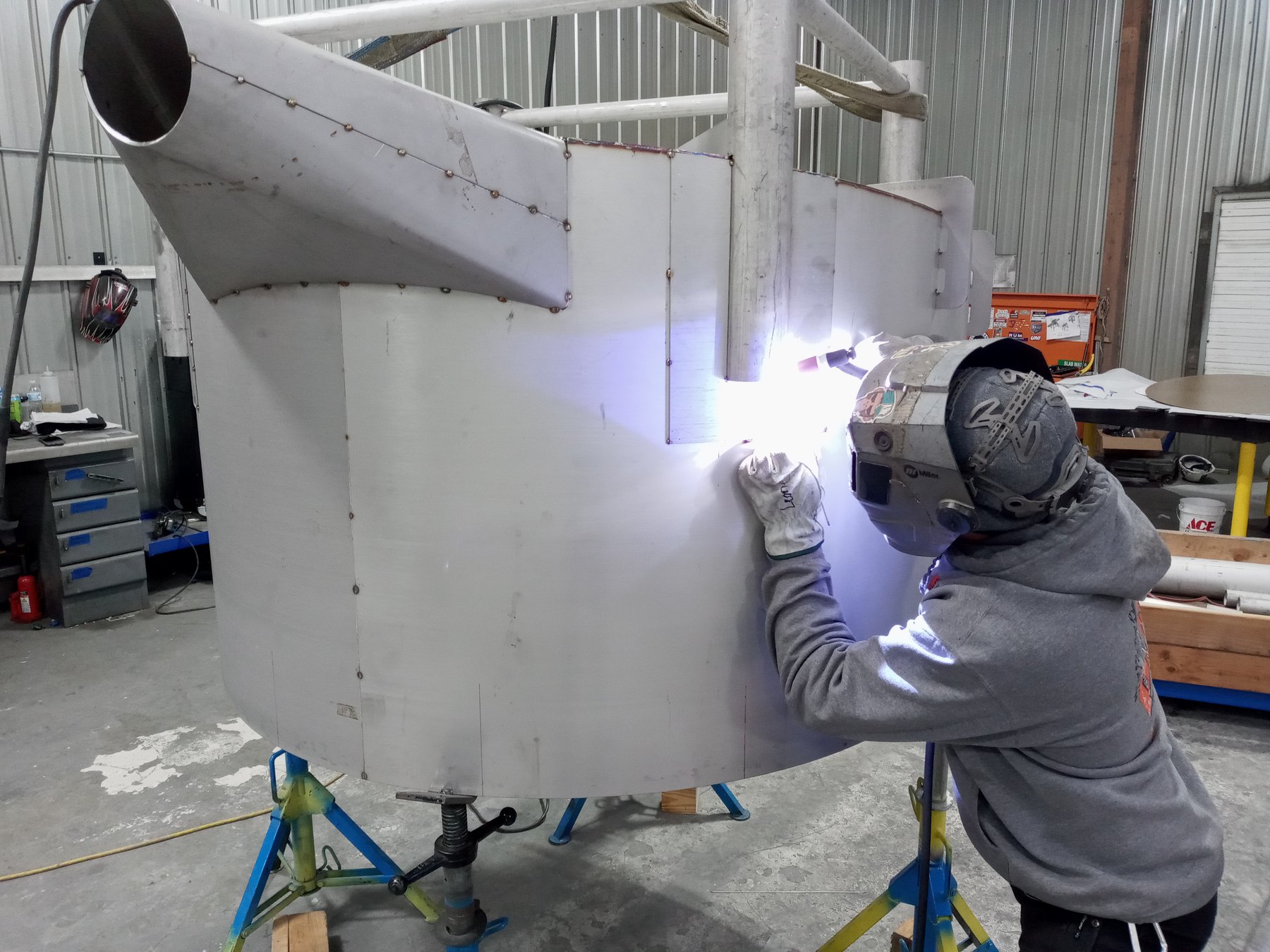
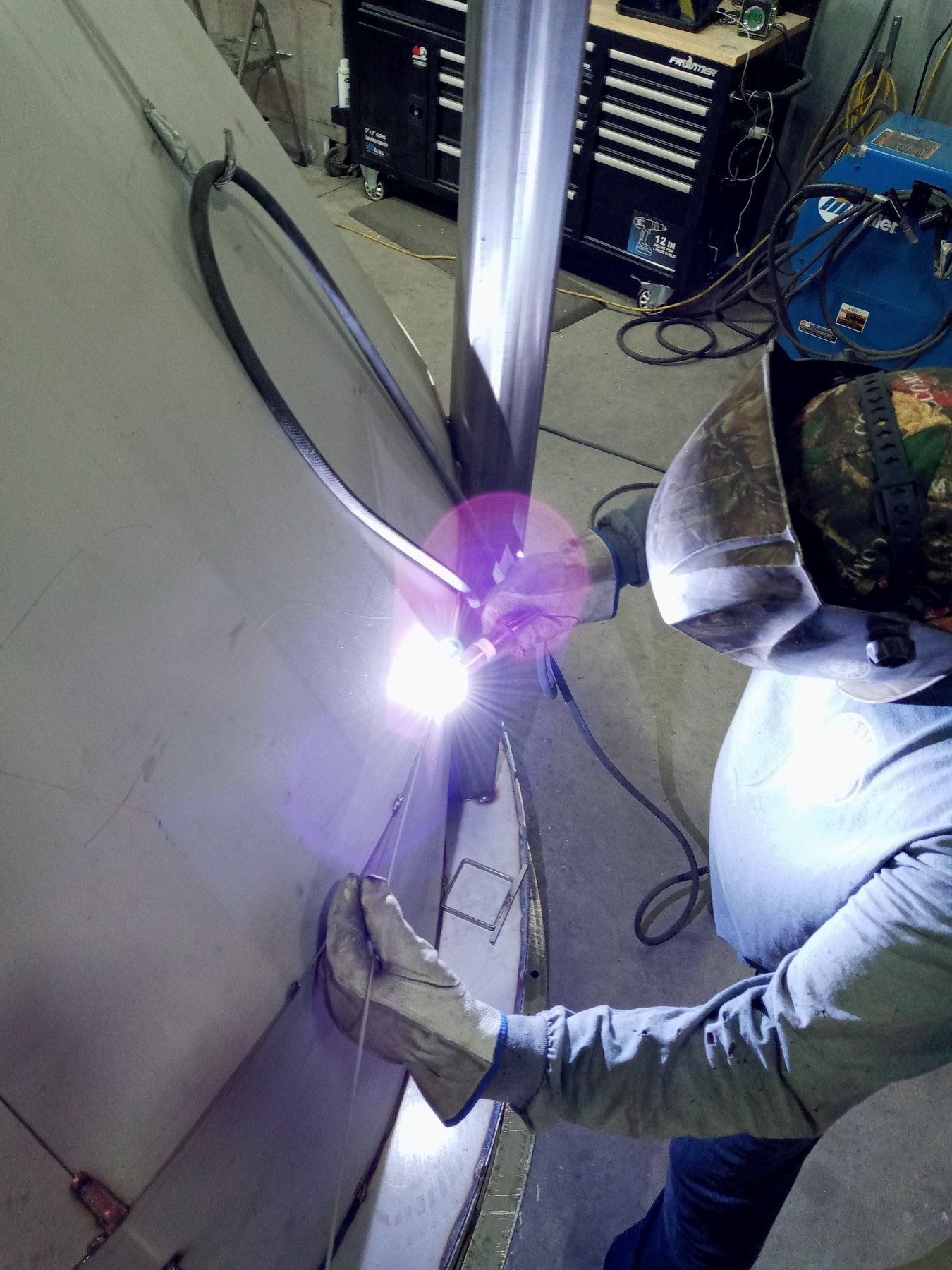
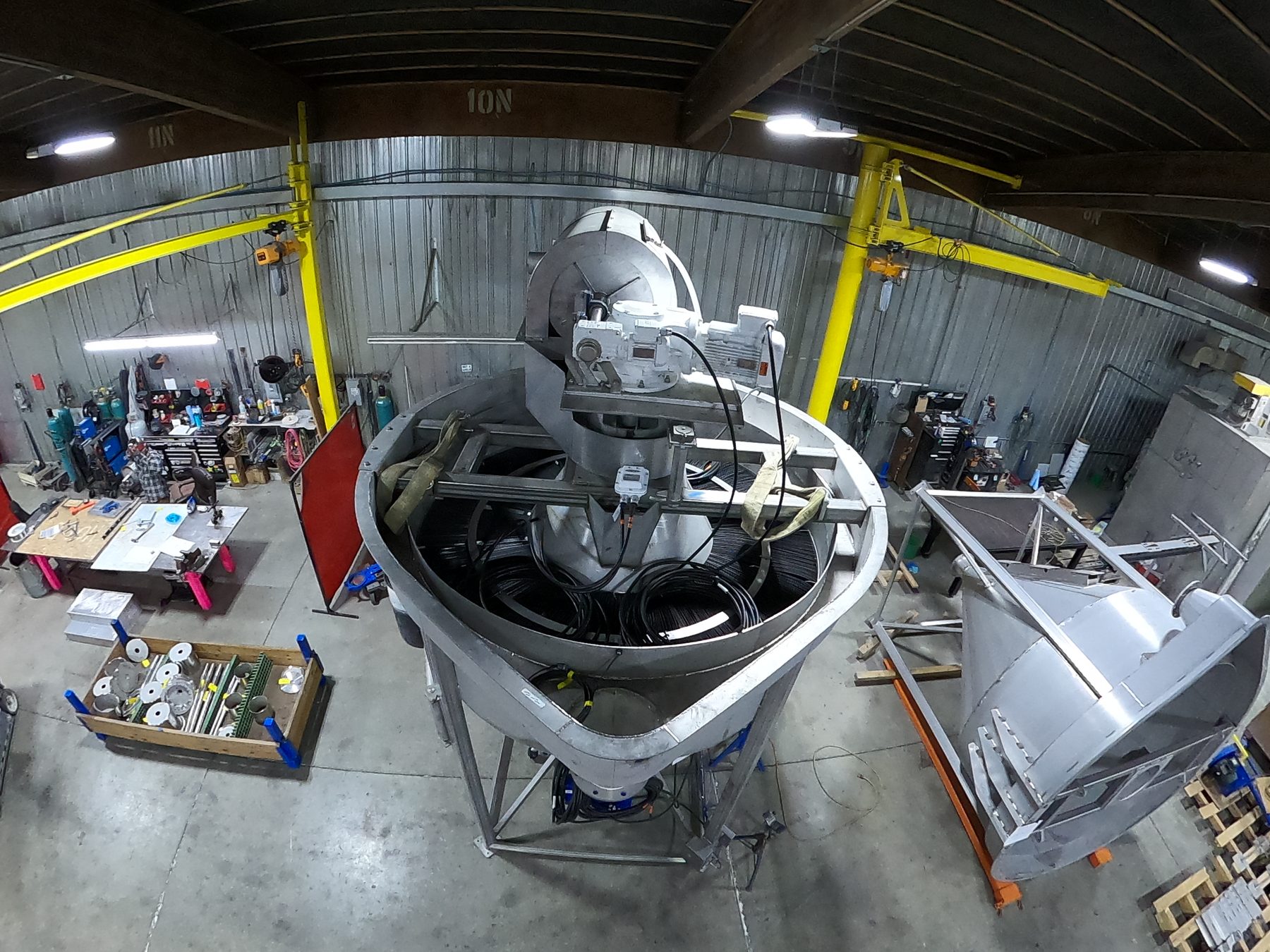
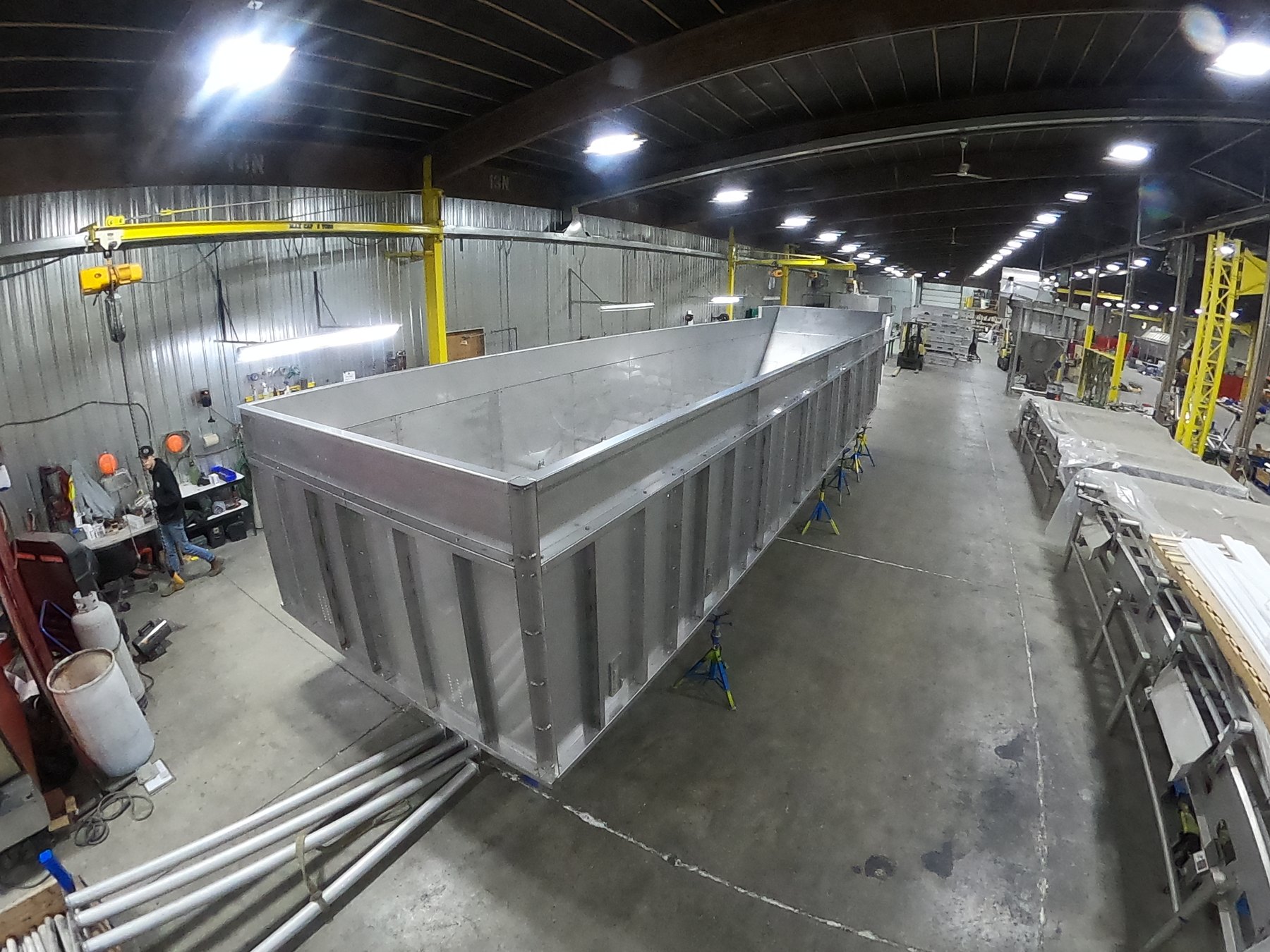
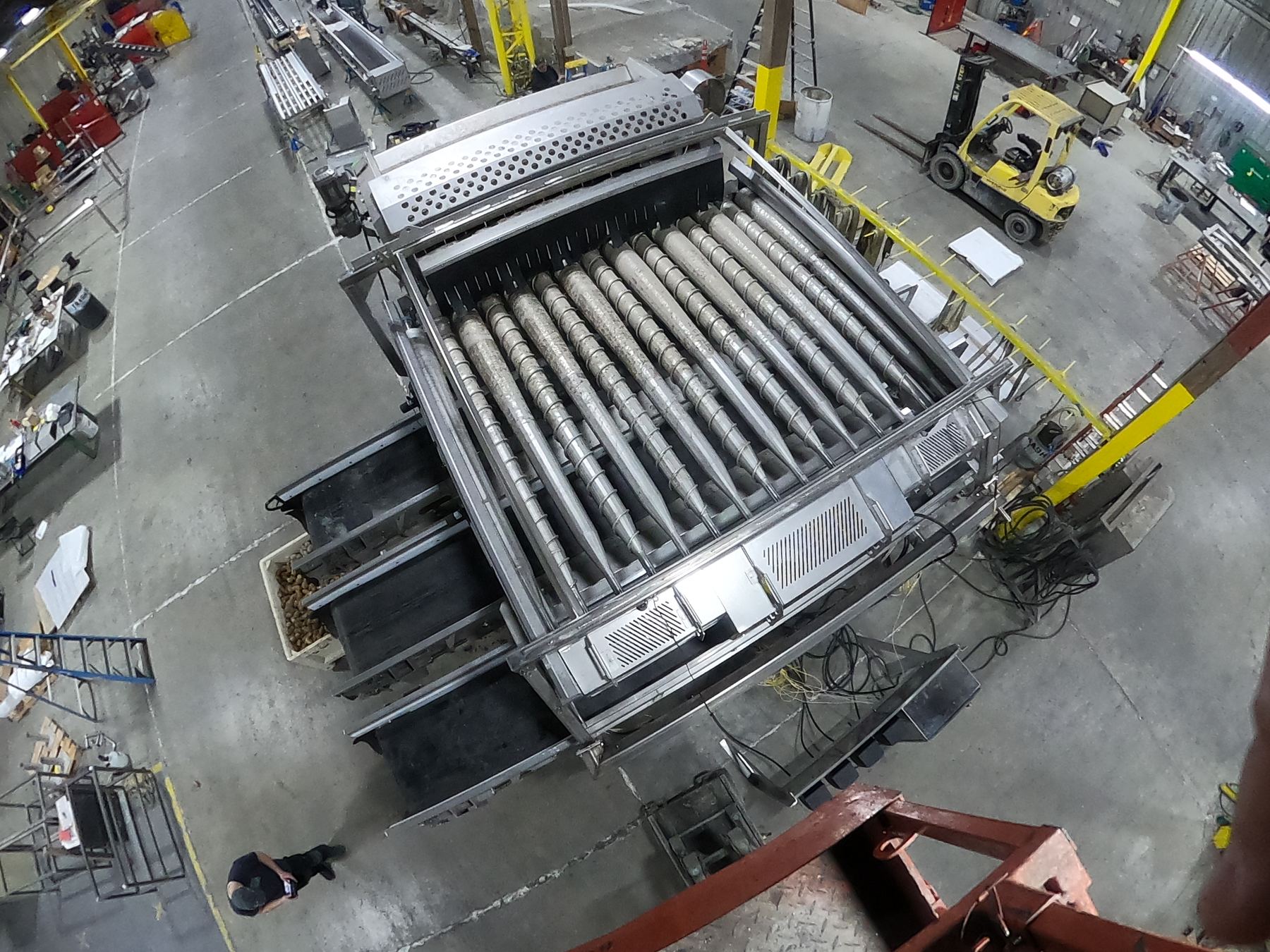
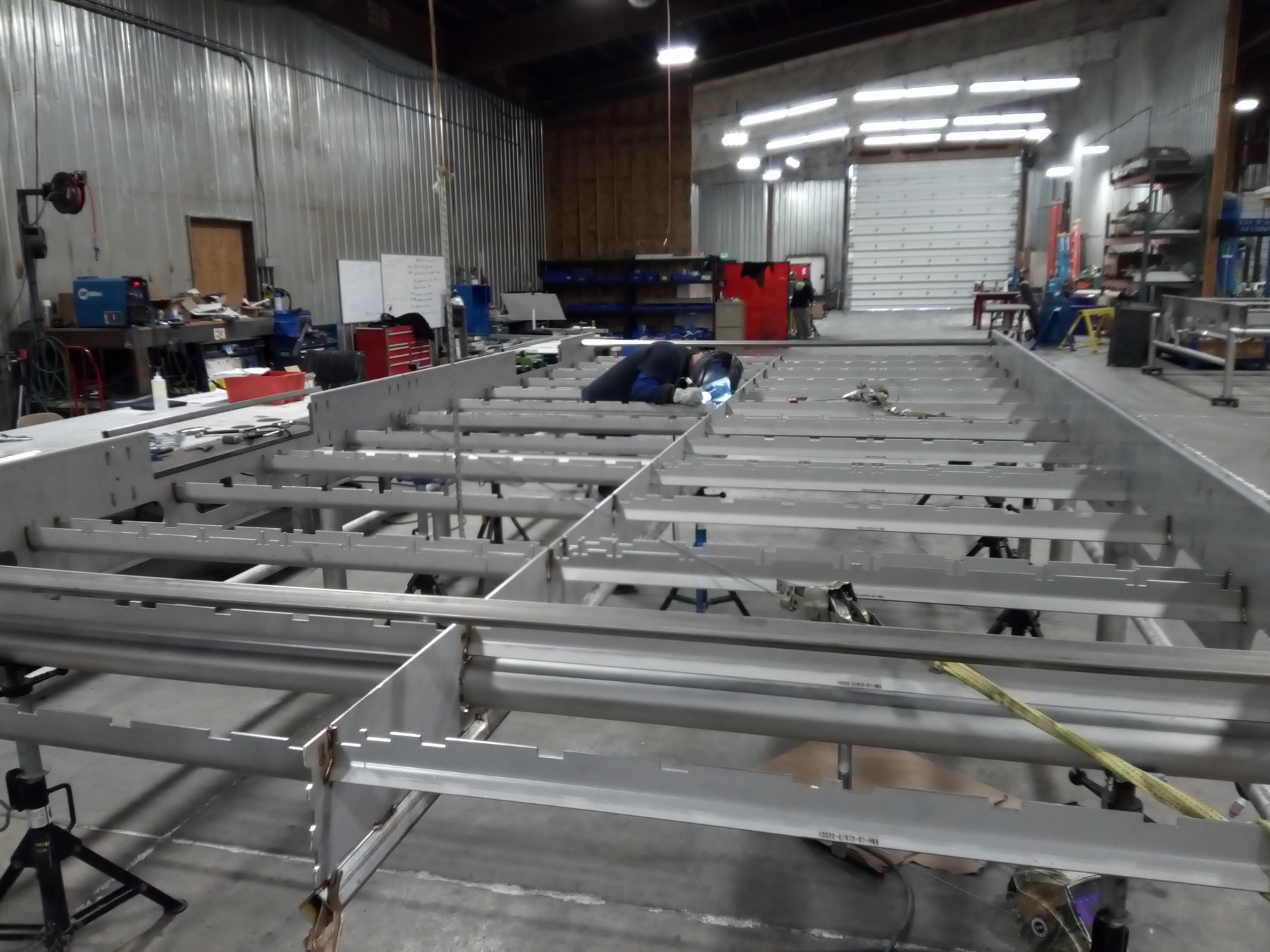
From the walk-through to the day it runs product.
The point of this sequence is that as little of it as possible happens inside your plant.
We walk the line
We measure, photograph and ask the questions that decide the build: what the product is, what temperature it runs at, what sprays on it at the end of the shift, whether it gets CIP’d, and what the clearances actually are rather than what the old drawing says.
Drawings, grade and finish agreed
We draw it and you approve it, or you send drawings and we build to them. Either way the grade, the surface finish and the joint detail are settled before anything is cut, and material is ordered with mill test reports so the certs exist when an auditor asks.
Built, welded and finished in Burley
Cut, formed, fitted and sanitary-welded on stainless-dedicated tables with stainless-dedicated consumables, then ground, blended, pickled and passivated. Anything that can be discovered in our building instead of yours gets discovered here, where fixing it costs hours instead of downtime.
Set in your plant, in your window
Delivery, rigging and setting, with field welds and tie-ins to the same standard as the shop work. We plan around shutdowns and changeovers, and because the fabrication is already done, the in-plant time is install time, not build time.
Welding & joining
- GTAW / TIG on sheet, plate and tube
- GMAW and pulsed MIG
- Continuous sanitary welds
- Argon back-purging on closed joints
- Field and in-plant welding
Forming & cutting
- Shearing and sawing
- Press brake forming
- Rolling and cylinder work
- Plasma and torch cutting
- In-house machining for mating parts
Finishing & handover
- Weld grinding and blending
- Pickling and passivation
- Mill and brushed finish matching
- Mill test reports on request
- Delivery, rigging and setting
Plants and places.
- Potato processing
- Dairy & cheese
- Food & beverage
- Sugar
- Cold storage & packing
- Pet food
- Agricultural processing
- Heavy industrial
Based at 238 W 35 S, Burley, Idaho, working across the Mini-Cassia and Magic Valley corridor and beyond: Burley · Rupert · Heyburn · Paul · Declo · Oakley · Albion · Malta · Jerome · Twin Falls · Hazelton · Eden · Kimberly · Filer · Buhl · Wendell · Gooding · Shoshone · American Falls · Pocatello · Blackfoot · Aberdeen · Idaho Falls · Rexburg · and the surrounding southern Idaho food and dairy belt.
Sanitary welding and stainless fabrication, answered straight.
What is sanitary welding?
Sanitary welding is welding done to a standard where the finished joint can be cleaned. On product contact that means a continuous weld rather than a stitch, full penetration with no undercut or overlap, the bead ground and blended flush into the surrounding surface so there is no crevice or ledge, the inside of closed joints shielded with an argon back-purge so the ID does not oxidise, and the heat tint removed and the surface passivated afterwards. A weld can be structurally perfect and still fail every one of those tests.
What is the difference between 304 and 316 stainless for food equipment?
316 contains molybdenum, which makes it far more resistant to chlorides. That matters in brine, salt, whey, acidic product and aggressive chlorinated sanitation, the places where 304 pits. For most dry and wet food contact, framing, hoppers, chutes and tables, 304 is the right answer and 316 is money spent on resistance you will never use. Tell us the product, the temperature and the sanitation chemistry and we will tell you which one the job needs.
Do you build to 3-A sanitary standards?
We build to 3-A design principles as a matter of course: continuous welds on product contact, surfaces finished to 32 Ra µin or better, drainable geometry, no crevices, and no exposed threads in the product zone. If your drawings, your customer or your auditor call for a specific 3-A specification, we will build to it. If you need equipment that carries third-party 3-A certification and the symbol, tell us at the quote stage so it can be scoped properly rather than discovered late.
How do you keep carbon steel contamination out of stainless work?
Segregation. Stainless-dedicated grinding wheels, flap discs and wire brushes, stainless-dedicated layout and fit-up space, stainless-only filler and consumables, and clamps and fixtures that have not been on mild steel. Free iron embedded in a stainless surface is invisible on delivery day and rusts on your plant floor, which makes it one of the few defects a customer cannot inspect for at handover.
Can you weld stainless in our plant, and work around a shutdown?
Yes to both. We do field welding, tie-ins and in-plant repair to the same sanitary standard as shop work, with the same segregated consumables, under your hot work permit and safety requirements. Give us the shutdown window and we plan the build backwards from it. Because we fabricate in Burley first, the in-plant work is setting and welding rather than building. For unplanned failures there is also a 24-hour line: (406) 480-4647.
Do you provide material certs and documentation?
Yes, on request: mill test reports for the material, as-built dimensions and photographs of the finished equipment. Ask for it at the quote stage so the material gets ordered with certs rather than chased afterwards. Retroactive documentation is the one thing nobody can produce.
Do you design the equipment, or do we need to supply drawings?
Either. Send drawings and we will build to them and flag anything in the detailing we think will cause a sanitation or maintenance problem. Or describe the problem and we will design and draw it for your approval. A good deal of what we build starts as a measurement, a photograph and a sentence about what keeps going wrong.
Send us the drawing. Or send us the problem.
Either works. If you have prints, we will quote them. If you have a chute that bridges, a tank floor that is worn through, or a line that has to be food-grade by spring, tell us what is happening and we will come look at it.
Visit the shop
Come see the work on the floor before you commit to it.
238 W 35 SBurley, ID 83318